
Legong Dance in Bali – The Beauty of Traditional Balinese Classical Dance
The Legong Dance (Tari Legong Bali) is one of the most famous and beautiful traditional dances on the island of Bali, Indonesia. Renowned for its graceful movements, expressive facial expressions, intricate hand gestures, and magnificent golden costumes, Legong Dance represents the elegance, artistic creativity, and cultural richness of Balinese heritage.
This traditional Balinese dance is an important part of Bali’s cultural identity and has been preserved for generations. It is commonly performed at cultural events, traditional celebrations, royal heritage occasions, and tourism performances. For visitors exploring Bali, watching a Legong Dance performance is an excellent opportunity to experience the island’s traditional performing arts and discover the beauty of Balinese culture.
Legong Dance is particularly popular among tourists visiting Ubud, where traditional dance performances are regularly presented in historical palaces and cultural venues. The combination of beautiful choreography, traditional gamelan music, colorful costumes, and fascinating storytelling makes this performance one of the cultural attractions worth experiencing during a holiday in Bali.
History and Origin of Legong Dance in Bali
The history of Legong Dance is closely connected with the royal courts of Bali, particularly the Sukawati Kingdom in Gianyar Regency. It is generally regarded as a classical Balinese dance that developed within the royal environment before becoming popular among communities throughout the island.
According to Balinese historical accounts and local tradition, the creation of Legong Dance is associated with I Dewa Agung Made Karna, the King of Sukawati, who ruled around 1775–1825. A popular legend tells that the king saw beautiful heavenly maidens dancing in an elaborate golden costume during meditation. Inspired by this vision, he encouraged the creation of a dance that would recreate the graceful movements and beautiful appearance of the celestial dancers.
Over time, Legong developed into a sophisticated classical dance featuring highly refined choreography, expressive gestures, and traditional musical accompaniment. It was initially associated with royal entertainment before spreading into Balinese villages and becoming an important part of the island’s performing arts.
Today, Legong Dance is recognized internationally as one of the most distinctive examples of traditional Balinese dance and continues to attract visitors interested in Indonesian culture and heritage.
Characteristics of Traditional Legong Dance
One of the most remarkable features of Legong Dance is its combination of delicate movements and highly controlled body techniques. Unlike ordinary stage performances, every movement in this dance follows carefully arranged choreography and is coordinated with the rhythm of traditional gamelan music.
The dancers use their hands, fingers, arms, shoulders, head, eyes, and feet to communicate emotions and portray different characters. Their movements may appear gentle and graceful, but performing them requires considerable discipline, flexibility, concentration, and years of practice.
Some distinctive characteristics include:
- Expressive Eye Movements: The dancers use a traditional Balinese technique called seledet, involving quick and precise eye movements that help communicate emotions and emphasize the rhythm of the dance.
- Elegant Hand Gestures: Delicate movements of the fingers and wrists are essential elements of Legong choreography.
- Precise Footwork: The dancers perform coordinated steps, small movements, and changes in body position that follow the rhythm of the gamelan orchestra.
- Beautiful Facial Expressions: Different expressions are used to represent happiness, sadness, surprise, anger, and other emotions.
- Synchronized Movements: When two or more dancers perform together, their movements are carefully coordinated to create beautiful symmetrical patterns.
These characteristics make Legong Dance a visually fascinating performance and demonstrate the exceptional skills of Balinese traditional dancers.
Traditional Legong Dance Costumes and Makeup
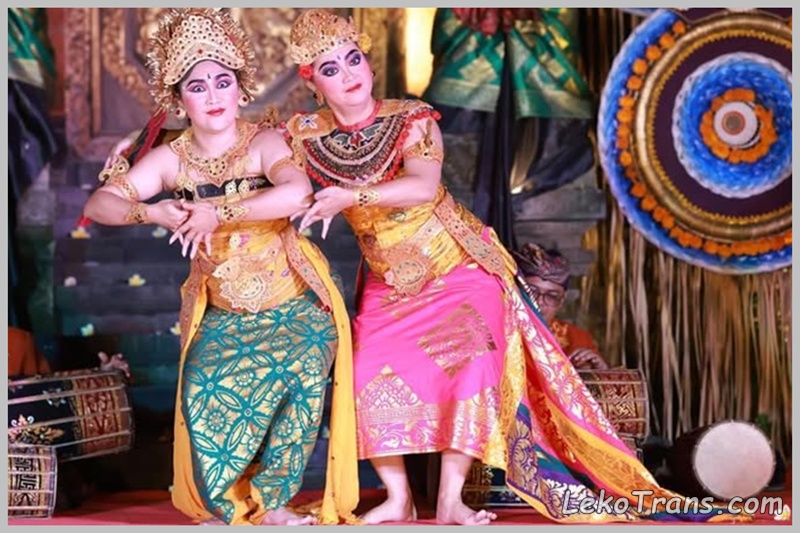
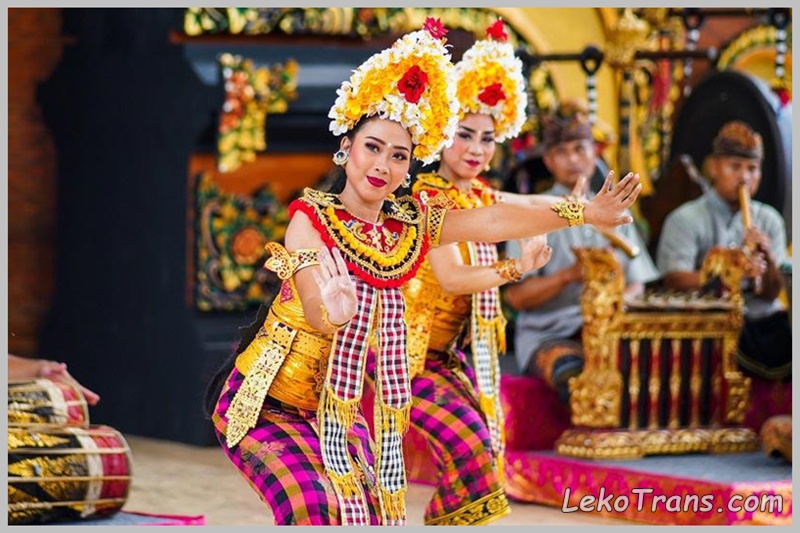
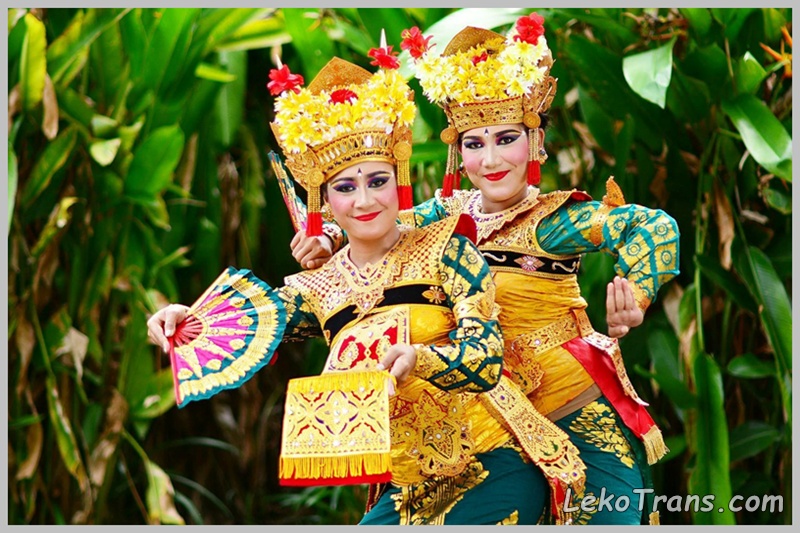
The costumes worn by Legong dancers are among the most attractive features of this traditional Balinese performance. The dancers usually wear colorful traditional clothing decorated with gold-colored ornaments, embroidered fabrics, and elaborate accessories.
One of the most recognizable costume elements is the large golden headdress, known as gelungan, which is often decorated with fresh flowers, including frangipani blossoms. This magnificent headpiece creates an elegant appearance and gives the dancers a distinctive traditional look.
Other costume accessories include:
- Prada Fabric: Traditional fabric decorated with beautiful golden patterns.
- Golden Headdress: An elaborate head ornament that forms an important part of the Legong dancer’s appearance.
- Traditional Accessories: Decorative ornaments worn around the neck, chest, arms, and waist.
- Traditional Makeup: Carefully applied makeup that emphasizes the dancers’ eyes and facial expressions.
- Traditional Sarong: Colorful clothing arranged according to the character and style of the performance.
The combination of golden decorations, colorful fabrics, traditional makeup, and graceful movements creates an unforgettable visual experience for audiences.
Traditional Gamelan Music Accompanying Legong Dance
Legong Dance is accompanied by traditional Balinese gamelan music, an important musical element that gives the performance its distinctive atmosphere.
The gamelan orchestra consists of various traditional musical instruments, including metallophones, gongs, drums, cymbals, and other percussion instruments. Their rhythmic melodies provide the musical foundation for the dancers’ movements.
The music is not simply background entertainment. It plays an essential role in determining the speed, rhythm, mood, and transitions of the choreography. The dancers must listen carefully and coordinate their movements with the changing musical patterns.
Traditional Legong performances are associated with the gamelan Semar Pagulingan and Gamelan Pelegongan, although different versions may use other Balinese gamelan ensembles, including Gong Kebyar.
The combination of traditional instruments and carefully coordinated dancing creates a captivating atmosphere that reflects the close relationship between Balinese music and performing arts.
Legong Kraton – The Famous Royal Court Dance
One of the best-known forms of Legong Dance is Legong Kraton, also called Legong Keraton or the Royal Court Legong.
This traditional dance-drama is commonly performed by three female dancers. One dancer takes the role of Condong, a female attendant who introduces the performance, while the other two dancers portray the principal Legong characters.
One of the traditional stories presented in Legong Kraton is the tale of King Lasem, taken from the Panji story cycle. The performance portrays a dramatic story involving a king, a princess, and the events surrounding their relationship.
Through graceful movements, expressive gestures, and coordinated choreography, the dancers bring the traditional story to life without relying on ordinary spoken dialogue.
Legong Kraton is particularly appreciated for its artistic precision, traditional costumes, and the harmonious relationship between dance and gamelan music.
Types and Variations of Legong Dance
Over the years, several forms and variations of Legong Dance have developed in different parts of Bali. Each version has its own choreography, musical arrangements, and traditional stories.
Some well-known variations include:
- Legong Lasem: A traditional dance-drama based on the story of King Lasem and Princess Rangkesari.
- Legong Kuntir: A dance based on the traditional Balinese story of Kuntir and Jobog.
- Legong Jobog: A traditional dance portraying the story of two brothers, Sugriwa and Subali, from the Ramayana tradition.
- Legong Kuntul: A dance inspired by the movements and behavior of white herons.
- Legong Sudarsana: Another traditional variation featuring its own dramatic storyline and choreography.
These different forms demonstrate the richness of Balinese dance traditions and the creativity of local artists who have maintained this cultural heritage.
Where to Watch Legong Dance in Bali
Visitors can enjoy traditional Legong Dance performances at several cultural destinations throughout Bali. Ubud is particularly well known for its traditional dance performances, making it one of the best places to experience this classical Balinese art.
Some popular locations to consider include:
1. Ubud Palace (Puri Saren Agung)
Ubud Palace is one of the most popular places to watch traditional Balinese dance performances. Located in the center of Ubud, this historical royal palace regularly hosts evening cultural shows featuring different traditional dances, including Legong.
2. Ubud Traditional Art Venues
Several traditional performance venues around Ubud present Balinese cultural shows for international visitors. Depending on the performance schedule, visitors may have the opportunity to watch Legong Dance alongside other traditional dances.
3. Peliatan Village
Peliatan Village in Ubud, Gianyar, is well known for its strong artistic traditions, particularly traditional Balinese dance and gamelan music. The village has played an important role in preserving and promoting Balinese performing arts.
4. Sukawati Village
Sukawati is historically associated with the development of Legong Dance through its royal heritage. The surrounding area of Gianyar is also known for traditional dance groups, cultural activities, and Balinese artistic traditions.
Performance schedules, locations, and ticket prices can vary depending on the organizer and season, so visitors should check the latest information before attending.
Legong Dance as a Cultural Attraction in Bali
Watching Legong Dance is more than simply enjoying a traditional performance. It provides visitors with an opportunity to understand the cultural values, artistic traditions, and historical heritage of Bali.
For international tourists, the performance offers a fascinating introduction to Balinese traditional arts. The beautiful costumes, expressive movements, traditional instruments, and storytelling create an authentic cultural experience.
Legong Dance is also an important part of cultural preservation. Local dance teachers, musicians, artists, and younger generations continue to learn and practice this traditional art to ensure that it remains an important part of Balinese heritage.
Whether you are interested in traditional Indonesian culture, photography, performing arts, or simply looking for an interesting evening activity, watching a Legong Dance performance is a worthwhile experience during your visit to Bali.
Visit Bali and Enjoy a Traditional Legong Dance Performance
If you are planning a holiday in Bali, consider including a traditional Legong Dance performance in your sightseeing itinerary. You can combine a cultural evening in Ubud with visits to other popular attractions, such as Ubud Palace, Ubud Art Market, Sacred Monkey Forest Sanctuary, Tegalalang Rice Terrace, and traditional Balinese villages.
For a more comfortable sightseeing experience, you can arrange a private Bali tour with a driver, allowing you to explore Ubud and its surrounding attractions at your own pace.
Discover the beauty of Legong Dance in Bali, experience the enchanting sounds of traditional gamelan music, and enjoy one of the island’s most treasured cultural performances.