
Barong Dance Bali – Traditional Balinese Dance and Cultural Performance
Barong Dance in Bali is one of the island’s most famous traditional cultural performances and an important part of Balinese Hindu heritage. This spectacular dance drama tells the story of the eternal struggle between good and evil, represented by two legendary characters: Barong, a mythical creature symbolizing goodness and protection, and Rangda, a frightening witch who represents evil and destructive forces.
For visitors exploring Bali, watching a traditional Barong Dance performance is an excellent opportunity to discover the island’s rich cultural traditions, mythology, religious beliefs, music, and performing arts. The performance combines elaborate costumes, expressive movements, traditional Balinese gamelan music, and dramatic storytelling to create an unforgettable cultural experience.
History and Meaning of Barong Dance in Bali
Barong Dance is deeply connected to Balinese Hindu beliefs and ancient traditions. The word Barong refers to a mythical protective creature that is commonly depicted as a lion-like animal, although its appearance can vary depending on the region and cultural tradition.
In Balinese mythology, Barong represents the positive forces of the universe, including goodness, protection, harmony, and prosperity. Its main opponent is Rangda, a powerful and frightening figure associated with negative energy, destruction, and black magic.
The central theme of the performance is the eternal balance between good and evil, often described through the Balinese philosophical concept of Rwa Bhineda. This concept teaches that opposing forces are natural parts of life and that harmony depends on maintaining a balance between them.
Rather than simply presenting a battle between two characters, Barong Dance reflects the Balinese understanding of life, spirituality, and the relationship between positive and negative energies.
The Main Characters of Barong Dance
The traditional Barong performance features several important characters, each with a special role in the story.
1. Barong – The Symbol of Goodness
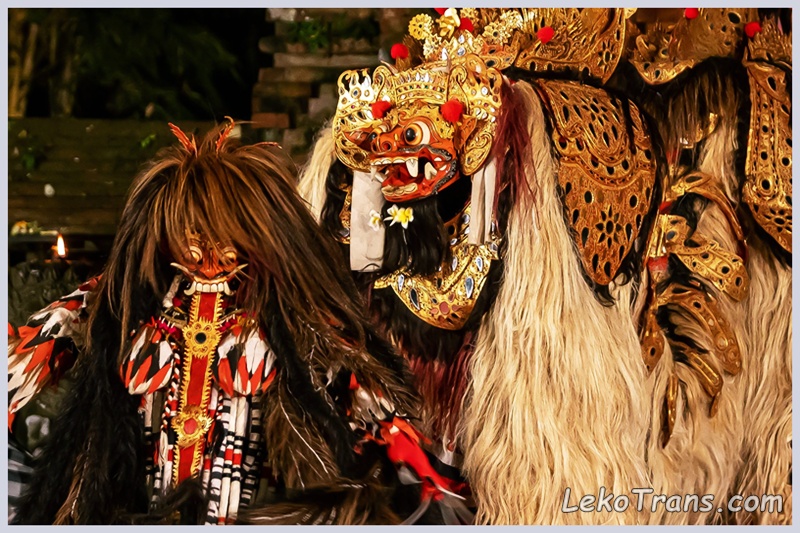
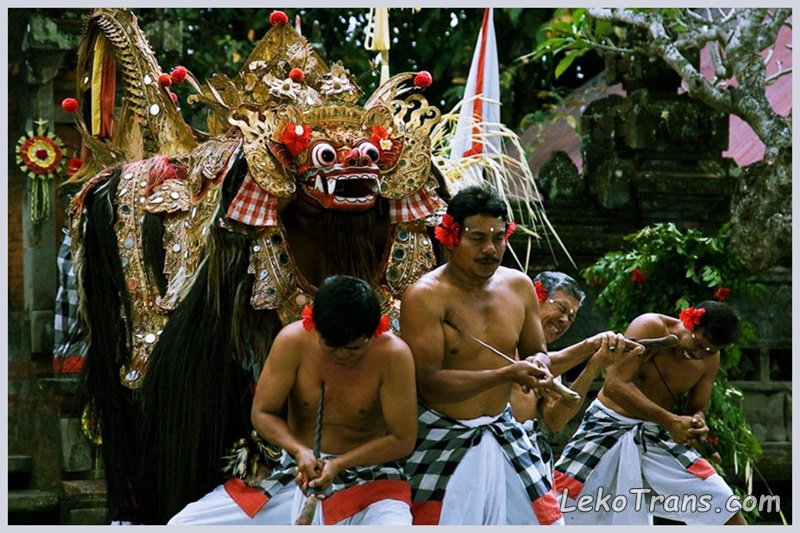
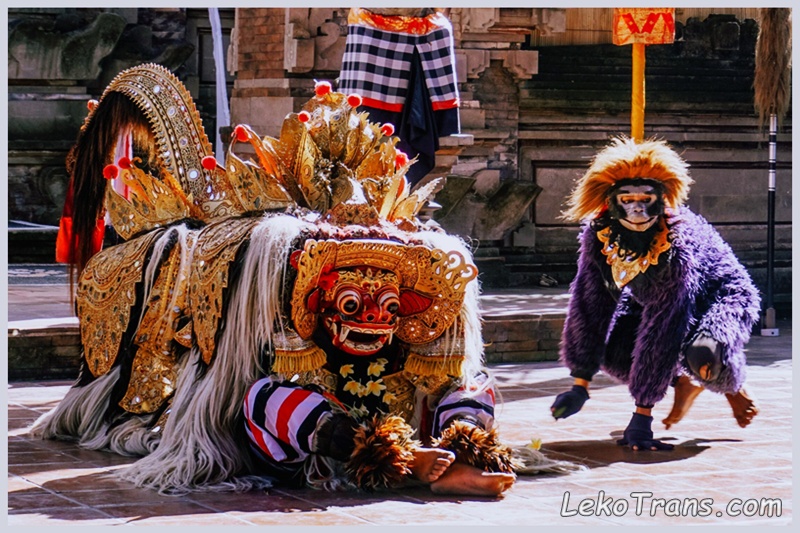
Barong is the main protective character in the performance. It is usually presented as a large mythical creature with a colorful costume, expressive eyes, decorated fur, and an impressive mask.
The most popular type is Barong Ket, which has a lion-like appearance and is traditionally performed by two dancers working together inside the costume.
Barong symbolizes goodness, protection, courage, and the positive spiritual forces that maintain harmony in the world. In Balinese tradition, Barong is also associated with the protection of villages and communities from negative influences.
2. Rangda – The Symbol of Evil
Rangda is the main antagonist of the Barong Dance story. She is portrayed as a terrifying witch with long white hair, sharp teeth, bulging eyes, long nails, and a frightening mask.
In Balinese mythology, Rangda represents destructive forces, negative energy, and black magic. Her appearance creates a dramatic atmosphere, especially during the scenes in which she confronts Barong.
The battle between Rangda and Barong is the highlight of the performance and illustrates the continuing struggle between opposing forces in the universe.
3. The Kris Dancers
One of the most dramatic parts of the Barong Dance is the appearance of the Kris dancers.
These dancers carry traditional Balinese daggers known as keris. During the performance, they become overwhelmed by Rangda’s supernatural power and enter a trance-like state.
In this scene, the dancers attempt to attack themselves with their keris, but their bodies are believed to be protected by spiritual forces associated with Barong.
This dramatic ritual scene is one of the most memorable elements of the traditional Barong and Keris Dance performance.
The Story and Performance of Barong Dance
A traditional Barong Dance performance generally begins with an introduction to the main characters and the story. The dancers perform to the accompaniment of Balinese gamelan music, which creates an energetic and sometimes mysterious atmosphere.
The story develops through several scenes:
1. Introduction of Barong
Barong appears on the stage, displaying playful movements and interacting with the audience. Its expressive gestures and colorful costume immediately attract attention.
2. The Appearance of Rangda
Rangda enters the performance and introduces a darker atmosphere. Her frightening appearance and dramatic movements represent the arrival of destructive forces.
3. The Conflict Between Good and Evil
Barong and Rangda confront each other in a dramatic battle. Neither side achieves a permanent victory, illustrating the Balinese philosophy that good and evil exist in a continuous balance.
4. The Kris Dance
The performance reaches its climax when the Kris dancers enter a trance-like state. They attempt to attack Rangda using their traditional daggers but are unable to overcome her supernatural power.
5. The Ending
The performance concludes with the continuation of the symbolic struggle between Barong and Rangda. The story emphasizes the importance of balance, protection, and spiritual harmony in Balinese life.
The duration and exact storyline may vary depending on the performance venue and the particular Barong Dance version presented.
Different Types of Barong in Bali
Bali has several different types of Barong, each with distinctive appearances, meanings, and cultural associations.
-
Barong Ket: The most famous type of Barong, featuring a lion-like face and elaborate costume. It is commonly performed in traditional dance dramas.
-
Barong Bangkal: A Barong resembling a large wild boar or pig, traditionally associated with village ceremonies and performances.
-
Barong Macan: A tiger-like Barong representing the strength and power of a wild animal.
-
Barong Landung: A pair of large human-like figures, usually representing male and female characters, with distinctive oversized costumes.
-
Barong Gajah: An elephant-shaped Barong that is less commonly encountered and associated with particular Balinese traditions.
Among these variations, Barong Ket is the most widely recognized by international visitors and is frequently featured in commercial cultural performances.
Where to Watch Barong Dance in Bali
If you want to experience a traditional Barong Dance performance during your Bali holiday, several cultural venues around the island regularly present this famous dance.
1. Batubulan Village – Gianyar
Batubulan is one of the most popular places to watch Barong and Keris Dance in Bali. The village is well known for its traditional dance performances, stone carving workshops, and cultural heritage. Performances are commonly held in the morning.
2. Ubud – Cultural Center
Ubud is another excellent destination for experiencing Balinese traditional performing arts. Visitors can find various dance performances, including Barong, Legong, and other classical Balinese dances, depending on the schedule.
3. Gianyar Regency – Traditional Villages
Several villages in Gianyar preserve traditional Balinese dance and cultural performances. Some venues organize Barong Dance shows for tourists and cultural visitors.
Barong Dance Performance Schedule
Barong and Keris Dance performances in Batubulan Village are commonly scheduled in the morning, often around 9:30 AM, although the exact time depends on the venue and daily schedule.
A typical tourist performance lasts approximately 45–60 minutes.
Visitors are advised to arrive early to purchase tickets, find suitable seats, and enjoy the atmosphere before the show begins. It is also recommended to confirm the performance schedule in advance, especially during public holidays and busy tourist seasons.
Barong Dance Ticket Prices in Bali
The entrance fee for watching Barong Dance depends on the performance venue, ticket category, and current management policy.
As a general guide, visitors may encounter ticket prices in the following range:
| Ticket category | Estimated price |
|---|---|
| International visitors | IDR 100,000–150,000/person |
| Domestic visitors | IDR 50,000–100,000/person |
These are indicative estimates, not confirmed current rates. Ticket prices and availability may change depending on the venue.
Some venues may include a printed storyline or program information with the ticket, helping visitors understand the meaning of each scene.
Best Time to Watch Barong Dance
Barong Dance performances are available throughout the year at established tourist venues, making them suitable for visitors regardless of the season.
Morning performances in Batubulan are particularly convenient because you can combine the cultural experience with visits to other attractions around Gianyar and Ubud.
For a more enjoyable experience, consider the following tips:
-
Arrive approximately 15–30 minutes before the performance.
-
Bring a camera to capture the colorful costumes and stage decorations, subject to venue photography rules.
-
Read the storyline beforehand to understand the characters and cultural meaning.
-
Respect the dancers and traditional elements, particularly during scenes involving trance rituals.
-
Check the latest performance schedule and ticket prices before visiting.
Attractions to Visit Near Batubulan
Watching Barong Dance in Batubulan can easily be combined with a sightseeing tour around Gianyar and Ubud. Some nearby attractions worth visiting include:
-
Celuk Village: Famous for traditional silver and gold jewelry craftsmanship.
-
Mas Village: Well known for traditional Balinese wood carving and artistic workshops.
-
Tegenungan Waterfall: A popular waterfall surrounded by lush tropical scenery.
-
Ubud Palace: A historic royal residence featuring traditional Balinese architecture.
-
Sacred Monkey Forest Sanctuary: A famous nature and cultural attraction in central Ubud.
These destinations can be included in a full-day Bali sightseeing itinerary with private transportation.
Explore Barong Dance with Leko Trans
If you are planning to visit Batubulan to watch the famous Barong Dance, arranging private transportation is a convenient way to explore the surrounding attractions.
Leko Trans provides transportation services with experienced local drivers for individual travelers, families, and large tourist groups.
You can arrange a private car, Toyota Hiace, Isuzu Elf, or tourist bus depending on your group size and travel requirements.
A suggested sightseeing itinerary includes:
-
Hotel pickup in Kuta, Seminyak, Sanur, Nusa Dua, or Ubud.
-
Watch the traditional Barong and Keris Dance in Batubulan.
-
Visit Celuk Village to discover Balinese silver craftsmanship.
-
Explore Mas Village and its traditional wood carving workshops.
-
Enjoy lunch at a local restaurant.
-
Continue to Tegenungan Waterfall or Ubud.
-
Return to your hotel.
With a private vehicle and local driver, you can enjoy a more flexible sightseeing experience without worrying about public transportation or arranging multiple transfers.
For group tours, family holidays, and cultural sightseeing trips, visit Leko Trans to find suitable transportation for exploring Bali.