
Wednesday | 28th January 2026
US forces are preparing to conduct a multi-day air exercise in the Middle East as Washington ramps up its military posture in the region amid sharply escalating tensions with Iran. The drills come at a moment of heightened political and military rhetoric, following warnings from President Donald Trump and increasingly defiant statements from Iranian officials.
According to US Central Command (CENTCOM), the exercise is designed to test the ability of US and partner air forces to operate in austere and high-pressure environments. In a statement announcing the drills, Lt. Gen. Derek France, commander of CENTCOM’s Air Forces (AFCENT) and the Combined Forces Air Component, said the exercise will demonstrate that airmen can “disperse, operate, and generate combat sorties under demanding conditions — safely, precisely and alongside our partners.”
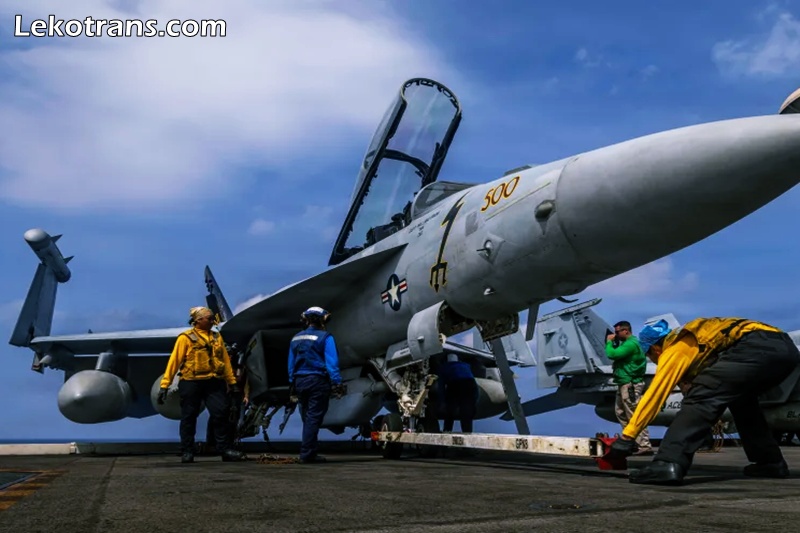
The announcement follows a series of stark comments from President Trump, who last week warned that an “armada” of US military assets was moving toward Iran and that military action remained a possibility. Those remarks coincided with the deployment of the USS Abraham Lincoln carrier strike group, which CENTCOM confirmed has already arrived in the region. The strike group significantly enhances US naval and air power in the Middle East, signaling Washington’s readiness to respond rapidly to potential contingencies.
Despite the visible military buildup, US officials stress that no final decision has been made regarding direct action against Iran. Sources familiar with internal deliberations told CNN that Trump continues to weigh his options and that there is currently no indication of an imminent strike. Speaking Friday, the president said the deployments were precautionary. “We have a lot of ships going that direction, just in case,” Trump said. “I’d rather not see anything happen, but we’re watching them very closely.”
CENTCOM has declined to provide specifics on the air exercise, including its exact location, duration, or the aircraft and units involved. Officials did emphasize, however, that the drills are being conducted with the consent of host nations and in close coordination with civilian and military aviation authorities. The command said the exercise prioritizes safety, precision, and respect for national sovereignty.
The growing standoff is unfolding against the backdrop of severe unrest inside Iran. In recent weeks, tensions have been inflamed by Tehran’s violent crackdown on widespread anti-government protests. According to a Tuesday report by the US-based Human Rights Activists News Agency (HRANA), more than 5,800 protesters have been killed since demonstrations began late last month, with an additional 17,091 deaths still under review. CNN has not independently verified those figures, though Iranian authorities have acknowledged that thousands of people have been killed.
Trump has repeatedly warned Iranian leaders against continuing the bloodshed and has threatened intervention if the regime does not change course. At the same time, he has signaled that diplomacy remains possible. Last week, Trump said Iran “wants to talk,” raising the prospect of negotiations. On Monday, a US official reiterated that the administration is open to discussions with Tehran, provided that Iranian leaders understand and accept US conditions.
Iran, meanwhile, has intensified its own rhetoric, warning that any US military action would trigger a forceful response with potentially destabilizing consequences for the entire Middle East. Iranian Foreign Ministry spokesperson Esmaeil Baghaei told journalists Monday that Tehran is “more than capable” of responding to any aggression and cautioned that such a response would be “regretful” for Washington. “The arrival of one or several warships does not impact Iran’s defensive determination,” Baghaei said, adding that Iranian armed forces are monitoring developments closely and continuously upgrading their capabilities.
In Tehran, the government’s messaging has taken on an increasingly confrontational tone. CNN journalists on the ground reported a large four-story poster in Enghelab — or Revolution — Square depicting the destruction of an American aircraft carrier. The image shows bodies strewn across the deck, with blood trailing into the sea in a pattern resembling the stripes of the US flag. The poster bears a warning in both English and Farsi: “If you sow the wind, you will reap the whirlwind.” Nearby, another government poster displays an image from 2016 showing US Navy personnel captured after their boat entered Iranian waters, with American service members kneeling in apparent surrender.
Complicating US military planning, several key regional allies have publicly distanced themselves from any potential strike on Iran. Saudi Arabia and the United Arab Emirates have both warned that they would not allow their airspace to be used for military action against Tehran. The UAE, which hosts US forces at a major base in Abu Dhabi, has also stated it would not provide logistical support for any attack.
As Washington balances military preparedness with diplomatic signaling, the upcoming air exercise underscores the administration’s effort to project strength while stopping short of committing to war. Whether that show of force deters further escalation — or contributes to it — remains an open question in an increasingly volatile region.