

Goa Gajah Temple Bali – Explore the Historic Elephant Cave Temple Near Ubud
Goa Gajah Temple, also known as the Elephant Cave Temple, is one of Bali’s most fascinating archaeological and historical attractions. Located in the peaceful village of Bedulu, Blahbatuh District, Gianyar Regency, approximately 26 kilometers from Denpasar and only a short drive from Ubud, this ancient sanctuary offers visitors a unique opportunity to discover Bali’s rich cultural and religious heritage.
Surrounded by lush tropical vegetation, beautiful rice fields, and the scenic Petanu River valley, Goa Gajah provides a peaceful atmosphere that contrasts with the impressive and mysterious stone carvings found throughout the complex. The temple is a popular destination for both domestic and international visitors interested in Balinese history, Hindu and Buddhist traditions, ancient architecture, and spiritual heritage.
Goa Gajah is particularly famous for its extraordinary cave entrance, which features a large carved stone face with an open mouth forming the entrance to the cave. This distinctive carving makes the site one of the most recognizable historical landmarks in Bali and an interesting destination for sightseeing, photography, cultural exploration, and religious visits.
Today, Goa Gajah is recognized as an important archaeological heritage site and forms part of Bali’s remarkable collection of ancient temples and cultural monuments.
History of Goa Gajah Elephant Cave Temple
The history of Goa Gajah dates back to approximately the 9th to 11th centuries. Historical evidence suggests that the cave was already known as a religious sanctuary during the ancient Balinese kingdoms. The archaeological remains indicate that the complex was associated with both Hindu Shaivite and Buddhist religious traditions.
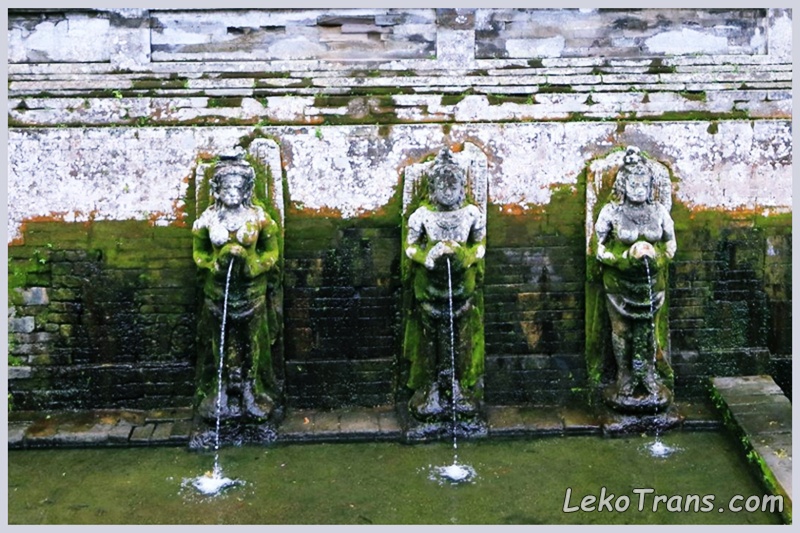
The cave was officially rediscovered by Dutch archaeologists in 1923, although local communities had known about the site long before its archaeological investigation. In 1954, Dutch archaeologist Dr. Krijgsman discovered and helped restore the ancient bathing pool and its water-spout statues located in front of the cave.
The name Goa Gajah is commonly translated as Elephant Cave. However, the historical name is believed to have originated from the ancient term Lwa Gajah, which appears in historical inscriptions and literature. The name is also associated with the nearby river, which is now known as the Petanu River.
An inscription discovered in the Bedulu area refers to a hermitage called Lwa Gajah, dating to around 1011 AD. This provides important historical evidence of the site’s religious significance during the early 11th century.
The archaeological remains found at Goa Gajah demonstrate the historical coexistence of Hinduism and Buddhism in Bali. Various statues, meditation niches, stupas, and sacred bathing structures suggest that the complex served as a place for religious activities, meditation, and spiritual contemplation.
Architectural Features and Archaeological Attractions
Goa Gajah is a remarkable archaeological complex containing several important historical structures. Its main attractions include the ancient meditation cave, bathing pools, stone statues, Buddhist relics, and Hindu religious symbols.
The site provides valuable evidence of the development of ancient Balinese architecture and religious traditions.
1. The Ancient Elephant Cave
The main attraction of Goa Gajah is the ancient cave, which was carved directly into a rocky hillside. Its entrance is decorated with an elaborate relief depicting a frightening face surrounded by decorative patterns representing jungle vegetation, animals, and mythical creatures.
The enormous face is commonly associated with Boma, a protective figure in Balinese Hindu mythology. Its open mouth forms the entrance to the cave, creating an impressive appearance that has fascinated visitors for generations.
Inside, the cave has a distinctive T-shaped layout. The entrance passage leads into the main chamber, where visitors can observe several niches carved into the stone walls. These niches are believed to have been used by ancient monks as places for meditation, prayer, and rest.
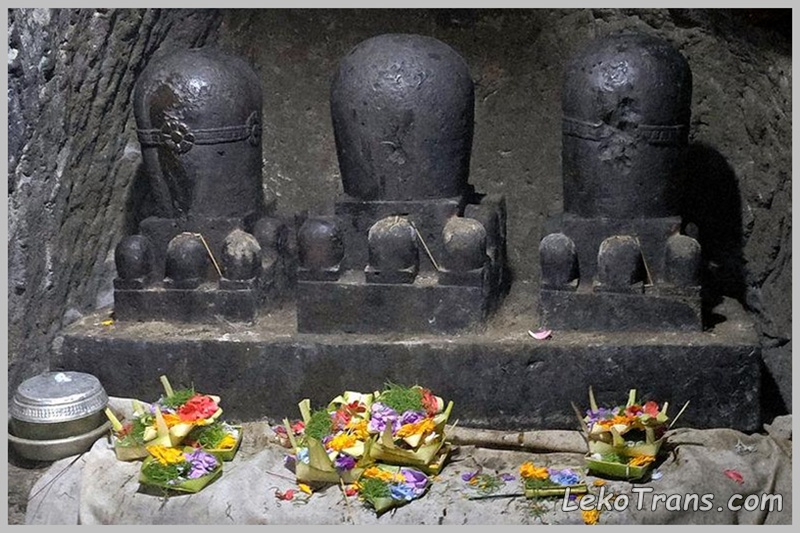
The interior contains important religious objects, including a statue of Ganesha and Shiva-related lingga symbols. These archaeological remains reflect the Hindu Shaivite influence associated with the site.
Although relatively small, the cave offers an interesting glimpse into the spiritual practices of ancient Balinese religious communities.
2. Ancient Hindu Religious Symbols
Inside the cave, visitors can find a statue of Ganesha, the Hindu deity traditionally associated with wisdom, knowledge, and the removal of obstacles.
There are also Shiva lingga representations, which symbolize the creative and divine power of Lord Shiva in Hindu religious traditions.
These sacred objects are important archaeological evidence of the Hindu religious influence at Goa Gajah. Together with the Buddhist remains found elsewhere in the complex, they demonstrate the site’s historical connection with different spiritual traditions.
3. Ancient Bathing Pools and Water Spouts
One of the most attractive features of Goa Gajah is its ancient bathing pool, situated a short distance in front of the cave entrance.
The bathing complex was discovered in 1954 by Dutch archaeologist Dr. Krijgsman. It consists of stone pools decorated with carved water-spout statues representing female figures.
Water flows from the statues into the bathing pools, creating a beautiful traditional structure that reflects the importance of ritual purification in ancient Balinese religious life.
The bathing pools are believed to have been used for sacred cleansing ceremonies by monks and other religious practitioners. Today, they remain one of the most photographed features of the archaeological complex.
4. Buddhist Heritage and Ancient Stupas
Besides its Hindu religious features, Goa Gajah also contains archaeological remains associated with Buddhism.
These include ancient stupas, Buddhist-related stone carvings, and meditation spaces that indicate the presence of Buddhist monks in the area.
Across the Petanu River, archaeological remains include a carved rock niche divided into sections, with representations of stupas and decorative umbrella-like elements.
These Buddhist features are particularly important because they provide evidence of the historical relationship between Buddhism and Hinduism in Bali.
The religious remains suggest that Goa Gajah was used as a spiritual retreat by Buddhist communities before, and possibly during, the period when Hindu religious traditions also became established within the complex.
5. Petanu River and Natural Surroundings
The natural surroundings add to the peaceful atmosphere of Goa Gajah. The archaeological complex is situated near the Petanu River, surrounded by tropical trees, green vegetation, and a beautiful valley landscape.
The location was likely attractive to ancient religious communities because of its quiet environment and proximity to natural water sources.
Visitors can enjoy walking through the temple grounds, exploring the stone structures, and appreciating the combination of historical architecture and tropical scenery.
Religious and Cultural Significance of Goa Gajah
Goa Gajah is particularly important because its archaeological remains reflect the historical development of Hinduism and Buddhism in Bali.
The site contains evidence of both Buddhist and Hindu religious practices, including Buddhist stupas, meditation niches, Ganesha statues, and Shiva lingga symbols.
During the ancient Balinese kingdoms, different religious traditions existed alongside one another and influenced the development of Balinese spiritual culture.
Over time, Hindu and Buddhist traditions became closely connected, contributing to the distinctive religious character of Bali today.
For Balinese Hindus, Goa Gajah remains a sacred place where visitors can observe traditional worship practices and experience the island’s spiritual heritage.
The temple is not simply an archaeological attraction but also an important cultural monument that helps preserve the history of Bali’s ancient civilizations.
The Historical Name Lwa Gajah
The name Goa Gajah has an interesting historical background. Although the name is commonly translated as Elephant Cave, historical references suggest that it originated from the ancient term Lwa Gajah.
An inscription associated with the Bedulu area mentions a hermitage known as Lwa Gajah around 1011 AD.
The name also appears in historical literary traditions, including references associated with the ancient Balinese kingdom.
The Nagarakretagama, a historical Javanese manuscript written by Mpu Prapanca in 1365 AD, contains references to religious places and the historical relationship between Java and Bali.
These historical connections help explain why Goa Gajah is considered one of the most significant archaeological sites in Bali.
Location of Goa Gajah Temple
Goa Gajah is situated in Bedulu Village, Blahbatuh District, Gianyar Regency, Bali, Indonesia.
The temple is approximately:
-
26 kilometers from Denpasar.
-
6 kilometers southeast of central Ubud.
-
35 kilometers from Kuta.
-
40 kilometers from Ngurah Rai International Airport, depending on the route and traffic conditions.
Its convenient location makes Goa Gajah an excellent destination for visitors exploring Ubud and the surrounding cultural attractions.
The temple can easily be combined with visits to other nearby destinations, such as Ubud Palace, Ubud Art Market, Yeh Pulu, Tegenungan Waterfall, and the ancient archaeological attractions around Bedulu.
Best Time to Visit Goa Gajah Temple
The best time to explore Goa Gajah is generally in the morning, when the atmosphere is cooler and the site is often quieter.
Visiting between 8:00 AM and 10:00 AM provides a comfortable opportunity to explore the cave, bathing pools, and surrounding gardens while enjoying the peaceful environment.
The dry season, usually from April to October, is also a popular period for sightseeing in Bali. However, Goa Gajah can be visited throughout the year.
Visitors should wear comfortable walking shoes because the temple complex includes stone pathways and stairways. Modest clothing is recommended, and visitors may be required to wear a sarong when entering sacred areas.


Nearby Attractions to Visit After Goa Gajah
Because Goa Gajah is located in the Bedulu and Ubud area, visitors can combine their visit with several interesting cultural and natural attractions.
1. Yeh Pulu
An impressive archaeological site featuring ancient stone reliefs carved into a rocky cliff, depicting scenes of traditional Balinese life.
2. Ubud Palace
A historic royal residence famous for traditional Balinese architecture and cultural performances.
3. Ubud Art Market
A popular shopping destination offering handmade souvenirs, traditional handicrafts, clothing, paintings, and local products.
4. Tegenungan Waterfall
A beautiful natural waterfall surrounded by tropical greenery, offering scenic views and photography opportunities.
Explore Goa Gajah Temple with Bali Private Transport
Visiting Goa Gajah is a wonderful way to discover the ancient history, cultural traditions, and spiritual heritage of Bali. For a more convenient sightseeing experience, you can arrange a private car rental with an experienced local driver or book a private minibus for families and groups.
Leko Trans provides private transportation services to Goa Gajah Temple and other popular tourist destinations around Ubud and Gianyar. You can customize your sightseeing itinerary according to your schedule, interests, and preferred destinations.
Our transportation services are suitable for:
-
Private Bali sightseeing tours with an English-speaking driver.
-
Family holidays and small-group excursions.
-
Airport transfers combined with Ubud sightseeing.
-
Full-day and half-day Bali tour packages.
-
Minibus and bus rentals for larger groups.
With comfortable vehicles and experienced local drivers, you can explore Goa Gajah, Ubud, and other famous Bali attractions at your own pace.
Book your Bali private transport with Leko Trans and discover the fascinating history of Goa Gajah Elephant Cave Temple and the cultural treasures of Bali.
Entrance Fee for Elephant Cave Temple
The entrance ticket allows visitors to explore this fascinating archaeological site, including the ancient Elephant Cave, historical stone carvings, sacred bathing pools, and surrounding temple grounds.
Goa Gajah Temple Entrance Fee:
-
Foreign Adult: IDR 50,000 per person.
-
Foreign Child: IDR 25,000 per person.
Additional Visitor Information:
-
Sarong Rental: Included in the entrance ticket. Visitors are required to wear appropriate clothing covering their legs and shoulders when entering the sacred temple area.
-
Parking Fee: Approximately IDR 5,000 for motorcycles and IDR 10,000 for cars.
-
Operating Hours: Generally open daily from 8:00 AM to 5:00 PM for tourists. Local religious worship may take place outside visitor hours.
-
Payment Method: Cash is generally accepted and recommended at the entrance ticket counter.
Important Note: Entrance fees, parking charges, and visiting hours may change depending on local temple management policies. Visitors are advised to confirm the latest prices directly at the ticket counter before visiting Goa Gajah Temple.